
Lending operations / GUIDE + WORKSHEET
Measure a Canadian broker channel beyond funded volume
Build a lender-side broker scorecard with submission cohorts, completeness, stage times, outcomes, product mix, pending files, and BDM follow-up.
THE STARTING POINT
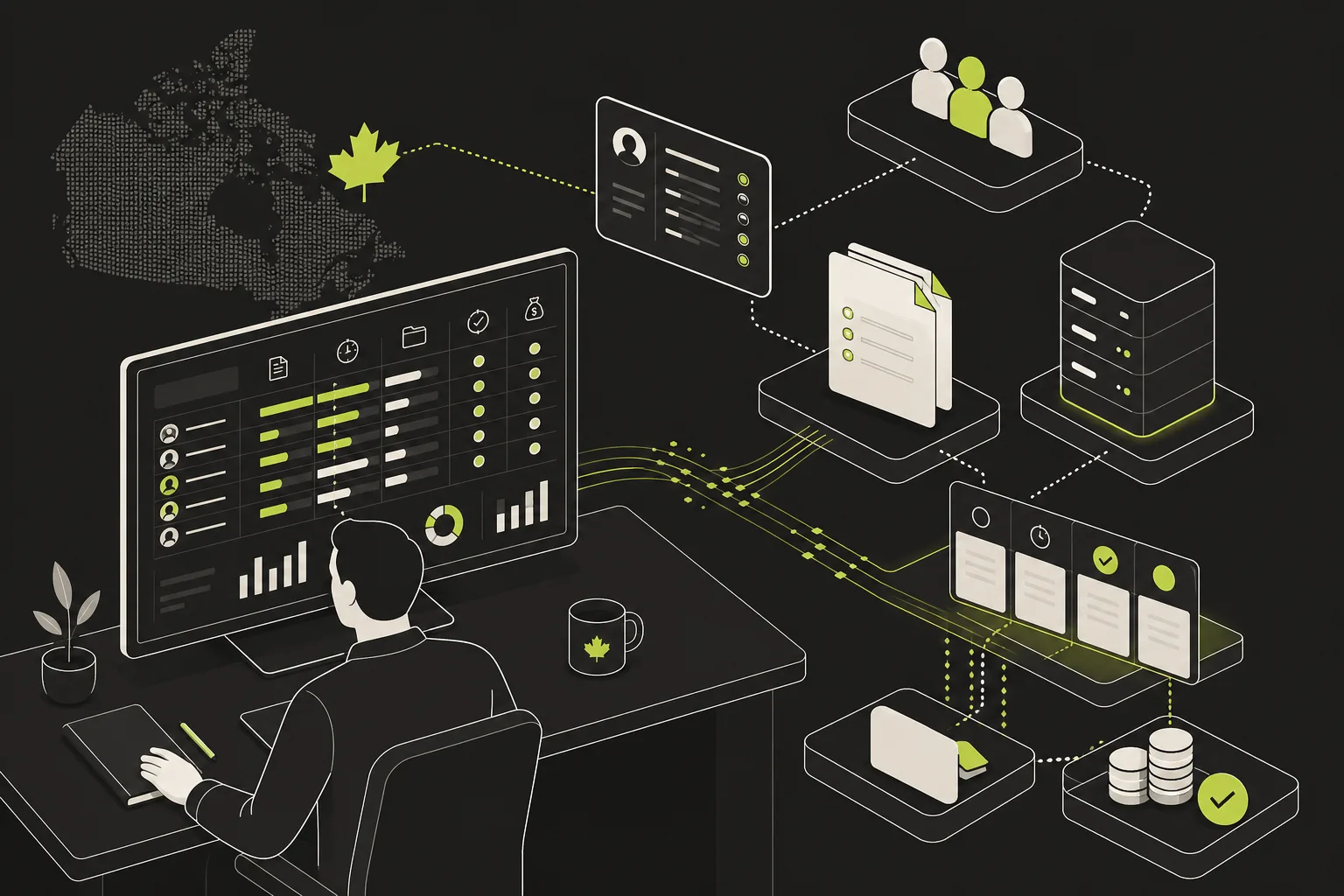
A Canadian mortgage lender should review broker partners with dated submission cohorts rather than a funded-volume leaderboard. For each partner, link one partner ID to each lender file and count submissions, complete packages, decisions communicated, fundings, withdrawals, and pending files, plus time between stages. Compare similar products and provinces; keep pending files visible and let the broker relationship owner explain context. CMP's 2026 survey rates lender service across ten categories, including turnaround, broker support, and technology, so one volume total cannot describe the relationship.
Give each broker and file a stable ID
A lender's CRM should store one partner ID for each brokerage and a separate contact ID for each broker, then link both to the lender's own file number. Keep the broker's submission reference beside the lender ID. If a file arrives through two routes, flag the duplicate for a person to resolve instead of assigning the same funding to two partners.
- Broker relationshipBrokerage ID, contact, BDM, and segment
- Lender fileUnique lender ID plus broker submission reference
- LOS milestonesComplete, under review, decision, funded, or pending
- BDM scorecardCohort view with source definitions and exceptions
Count observable stages with clear denominators
A useful broker scorecard separates files received, packages complete, files assigned to underwriting, decisions communicated, fundings, withdrawals, and still-pending files. Define whether the denominator is files or dollars and use the same intake and funding dates for every partner. Keep elapsed days attached to named stage changes, not to a broad label such as fast or slow.
- 1SubmittedCount one lender file and capture its partner ID.CRM + intake
- 2CompleteRecord the date required items are received.Portal or LOS
- 3DecisionLog communicated decision and date; keep pending separate.LOS + BDM
- 4FundedReconcile the outcome to servicing or funding records.LOS + servicing
Compare service without hiding file mix
A lender should compare cohorts within product, province, and reporting period before drawing conclusions about a broker relationship. Show counts beside rates so a small sample does not look certain, and separate files still in underwriting from final outcomes. CMP's 2026 Brokers on Lenders survey measures ten service categories and separates Prime from Alternative lenders; use it to see what brokers discuss, not as a performance target for your own shop.
- Submissions
- Needs attention: 16 received · 12 complete
- Outcomes
- 4 funded · 2 declined · 3 withdrawn
- Still open
- Needs attention: 3 pending · not counted as losses
- Turn time
- Median receipt-to-complete days · n=12
- Next review
- BDM checks three incomplete packages
Use the scorecard to choose a human follow-up
A lender's BDM should use an outlier to ask what happened, not to label a broker as good or bad. A cluster of incomplete packages may call for a clearer checklist; long waits before decision communication may need an internal handoff review. Leave credit decisions with underwriters and keep any partner compensation outside this scorecard and its measures.
Volume only
- Large counts can hide incomplete files
- Pending files disappear from the story
- The BDM has no specific next question
Operational scorecard
- Stage counts and definitions are visible
- Mix and unresolved files stay in view
- A human owner follows up on an exception
WORKED EXAMPLE / ILLUSTRATIVE
A fictional lender broker cohort
The counts are invented for illustration. Pending and withdrawn files remain separate so the lender does not treat every unresolved submission as the same outcome.
| Fictional partner cohort | Intake and outcome | Follow-up owner |
|---|---|---|
| Broker B-07 · Q2 | 16 submitted; 12 complete; 4 funded; 3 pending; 3 withdrawn; 2 declined | BDM reviews incomplete packages and pending age |
| Broker C-12 · Q2 | 6 submitted; 5 complete; 2 funded; 1 pending; 1 withdrawn; 1 declined | BDM checks whether the sample is large enough to compare |
| Broker D-03 · Q2 | 14 submitted; 4 complete; 0 decisions; 10 incomplete | Channel operations checks item-level intake issues |
| Broker E-19 · Q2 | 7 submitted; 7 complete; 6 decisions; 5 funded; 1 declined | BDM records product mix before interpreting turn time |
MAKE IT USEFUL
Canadian broker channel scorecard
Define each measure and its source before comparing broker relationships or changing service coverage.
Your notes stay in this page and are not sent to Smithers. Download or copy them before leaving; refreshing clears them.
Before you put it to work
- Reconcile a sample of partner IDs to lender file IDs.
- Agree what counts as complete before measuring completeness.
- Separate pending, declined, withdrawn, and funded outcomes.
- Compare similar products, provinces, and date cohorts.
- Use small samples as prompts for review, not performance rankings.
CMP's broker survey measures broker perceptions across its own categories; it is not a benchmark for an individual lender's funnel. This guide covers Canadian mortgage operations. US mortgage partner programs have separate requirements: RESPA Section 8 restricts things of value for referrals of federally related mortgage business, and a CRM scorecard does not define a permissible payment. This is general information, not legal advice. Confirm requirements with your compliance counsel.
Source notes
These references support the specific product or technical points discussed above. Checked October 12, 2026.
- Canadian Mortgage Professional, Brokers on Lenders 2026 survey
- Canadian Mortgage Professional, Brokers name Canada's best mortgage lenders as survey turns 20
- Canadian Mortgage Professional, Canadian brokers navigate pricing chaos and slow turnaround times
- CFPB, Real Estate Settlement Procedures Act FAQs
IF THIS LOOKS FAMILIAR
Your tools. Your particular mess.
The worksheet is yours to use. If the difficult part is making it work with the systems you already have, that's the kind of thing we help with.
See the industry context